For quite a while, I've been wanting to write a post about Jacques Rancière's work on politics and its potential usefulness for those of us interested in the relationship between cities and citizenship. Most of that material has subsequently ended up in stuff I've written elsewhere, so rather than write a long post here, I figured I could at least say a few brief things about why I've found his work so interesting, and what I've tried to do with it...
I first encountered Rancière's work while reading Kristin Ross's awesome book May '68 and its Afterlives. There, she used some of Rancière's work on politics and police in two ways. First, her analysis of the politics of '68 is heavily influenced by the notion that these events involved a radical form of 'displacement' in which people refused to be reduced to the 'proper' activities associated with their identification as 'students', 'workers', 'farmers, etc. Second, she draws on Rancière to analyse the ways in which revisionist accounts of the events tended to 'police' them by insisting that they were part of an emergent consensus about the need to modernise French society, rather than events which introduced dissensus about the nature of French society. Mustafa Dikeç's book Badlands of the Republic also used Rancière to demonstrate the ways in which people from the banlieue were denied a political voice in French society.
So, for a little background on Rancière, I can highly recommend this piece from the Critical Theory blog: Who the fuck is Jacques Rancière? Rancière's particular approach to politics developed out of frustration with the 'laughable' distance he perceived between the events of May 1968 in Paris and the structural Marxism associated with Althusser (with whom Rancière worked on Reading Capital). This frustration initially sent him into the archives, looking for the ways in which working people had confronted their circumstances in nineteenth century France.
Two key ideas that emerged out of this work were his particular approach to equality and democratic politics, and the associated notion of politics as challenging the 'partition of the perceptible'. To explain briefly (and probably badly!), a key claim now associated with Rancière is the notion that in democratic politics, equality is not so much something that one strives towards (as in, "the world is unequal, so we need equality!"), but something that we enact in a given situation (as in, "we are equals, and society isn't recognising our equality, so we are going to make another world that does!"). By tracing the meaning and consequences of equality in a situation, democratic politics involves a confrontation with the 'partition of the perceptible' that polices the social. The 'partition of the perceptible' describes the situation in which only some things seem to be 'sayable' or 'doable' in any given society. Of course, this concept is not something original to Rancière! But I do kinda like the particular way he discusses this, and the challenge it poses for politics. His emphasis on politics as a process in which people manage to make "another time with that time, another space within that space" sits nicely with the ways in which I understand the challenging of making counter-public spaces and spheres.
Anyways ... I'm excited to say that the fruits of some of this reading, thinking, talking and research are making it into print. Mark Davidson and I have written two papers together, both of which are now available. And I've done a few more on my own. So, in an act of shameless self-promotion (but hey, it's my blog I guess...!), here's some brief info about the papers and what they are trying to achieve.
1. "Recovering the politics of the city: from the 'post-political city' to a 'method of equality' for critical urban theory", Progress in Human Geography (with Mark Davidson).
This piece was written Mark and I were getting deeper into some of Rancière's work, and finding it really exciting because we felt that it helped us chart a path between 'politics is everywhere' and 'politics is nowhere'. In this particular paper, we warn against the idea of the 'post-political city' ... not by saying that 'hey, everything's political, and there's politics everywhere!', but rather by focusing on situated enactments of equality through processes of political subjectification as the basis of democratic politics. Rancière suggests his approach can be defined as a 'method of equality', one that seeks to draw out the connections between enactments of equality that take place in different historical and geographical contexts.
2. "Occupations, Mediations, Subjectifications: Fabricating Politics", Space and Polity (with Mark Davidson).
This one is part of a collection of papers on Rancière. We were really excited to be asked to contribute, and it was a great opportunity to apply (and extend) some of the thinking we'd done for our other paper to engage with the inspiring political mobilisations that have been going on in several cities over the past few years. The article draws on Rancière to examine the relationship between urban space and politics in these events ... both to help us make sense of the events, but also to build on Rancière's work to trace out the geographical dimensions of politics.
3. "Policing the City", in Urban Politics: Critical Approaches, edited by Mark Davidson and Deborah Martin.
This chapter riffs on the relationship between politics and police (a central relationship in Rancière's work), but unlike the two pieces above, this one is focused on the 'police' end of the spectrum. Thinking through the practice of graffiti (I can't help myself!), the chapter draws on Rancière's approach to policing to demonstrate the broad range of actors involved in efforts to put graffiti in its 'proper' place, from urban authorities like police and urban designers to youth workers and graffiti artists themselves. Rancière, Rudy Giuliani, Banksy and Robbo all make appearances. This one was fun to write too ... and hopefully illustrates the usefulness of Rancière's work in helping us to think through the practice of policing beyond the actions of the uniformed police.
4. "Cities within the City: Do-It-Yourself Urbanism and the Right to the City", International Journal of Urban and Regional Research.
This one came out of a presentation I gave ages ago at a conference on the right to the city organised by Lee Stickells and Zanny Begg. With all the excitement about the 'micro-spatial' interventions of DIY urbanists in hacking and reclaiming urban spaces, the paper sets out to ask about the kinds of 'right to the city' that are being enacted. Conceptually, the paper draws on both Rancière and Lefebvre to develop a framework for interrogating the politics of DIY practices. Empirically, I discuss both BUGAUP and the Public Ad Campaign as examples of DIY urbanism that enact a democratic right to the city premised on the equality of urban inhabitants. There's some hopeful speculation at the end about how various DIY practices might begin to add up to more than the sum of their parts, through a shared commitment to democratic urban politics.
5. "Building a City for 'The People': the politics of alliance building in the Sydney green ban movement", Antipode.
I've already mentioned on the blog that I have a piece included in a special issue of Antipode on Grammars of Urban Injustice. I kinda feel like I've had Rancière hovering over my shoulder while in the archives doing this project - as noted above, his 'method of equality' emerged from archival research. While the paper takes issue with some of Rancière's blind spots (especially on the question of political organisation), this paper is particularly influenced by his work in its content and its form. In particular, I was really keen to structure the paper around the voices of diverse green ban activists, who had their own analysis of the forms of politics they practiced.
As ever, if you'd like copies of any of these and can't get hold of them, drop me a line...
Thursday, March 19, 2015


Antonis Vradis on protests in Brazil...
 |
| Add caption |
[So, it has been an age since I've posted here ... time to get back into it!]
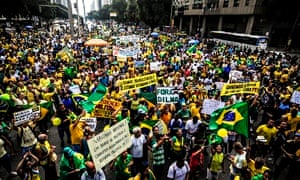
Back in 2013, I wrote a short post on the mass protests that took place in Brazil, which involved a dramatic escalation of marches initially held to protest increases in public transport fares
Antonis Vradis has just written some interesting pieces on more recent protests taking place in Brazil calling for the resignation of President Dilma Rousseff ... this one for the Guardian, this one for Open Democracy. While the protests have generally been seen as a right-wing mobilisation against Rousseff's government, Antonis suggests things might not be so simple...
Antonis has been working on a project called The City at a Time of Crisis ... check out the project website here.
Monday, June 2, 2014
Remembering Tiananmen Square: the 25th Anniversary of the June 4 massacre
 |
| Protesters in Tiananmen Square, Beijing, June 2 1989 (Source: Boston Globe) |
4 June 1989 was the date on which the Chinese Government brutally smashed the occupation of Tiananmen Square in Beijing. The Square had been the target of protest since April of that year, in a pro-democracy protest initially led by students but which quickly gathered broader support. At times during these 6 weeks, the Square was filled with over 1 million people.
There will no doubt be plenty of anniversary articles written about these events to mark their 25th anniversary. Among them, novelist Ma Jian has written a great article for the Guardian about his experiences of the 1989 movement, and of the fate of some of his fellow protesters and the Chinese democracy movement in the years since.
Of course, the stories of historical events like this are always told through the lens of the present, and for me at least, it's hard not to think about Tiananmen in relation to other more recent pro- (and anti-) democracy occupations and demonstrations. Reading the article, passages like the following have a strong resonance with recent events:
The democracy protests were ... a spontaneous mass uprising, a jubilant national awakening, in which millions of students, workers and professionals gathered peacefully in public squares around the country for weeks on end to call for rights guaranteed to them by the constitution: freedom of speech, of the press and of assembly and freedom to elect their leaders – basic liberties that the west takes for granted. They were among the most orderly, restrained and self-disciplined protests the world has seen. Student marshals maintained crowd control; armies of volunteers distributed food and drink and provided free medical care. In the madness of 20th-century China, the Tiananmen protests were a moment of sublime sanity, when the individual emerged from the somnolent collective and found their true voice.
In this atmosphere of freedom, people used their innate creativity and intelligence to challenge and question state power. Teenagers strummed Bob Dylan ballads around campfires and danced in the dark. The Beijing Symphony Orchestra brought its instruments to the square and gave an impromptu performance of Beethoven's Ode to Joy. Art students erected a replica of the Statue of Liberty right opposite the huge portrait of Chairman Mao on the square's northern edge. The student leader, Wu'er Kaixi, rebuked Premier Li Peng on national TV, dressed in striped pyjamas. In a makeshift Democracy University, professors gave seminars on Thomas Paine and the French revolution. When the government rejected pleas for dialogue, hundreds of students tied white bandanas around their heads and went on hunger strike. On 3 June, Liu Xiaobo, then a lecturer at the Beijing Normal University, staged his own hunger strike on the square with the economist Zhou Duo, the rock star Hou Dejian and party member Gao Xin, to protest against martial law and call for a peaceful transition to democracy.Reading this great article reminded me of a couple of articles about Tiananmen Square that I read a long time ago as an undergraduate student by sociologist Craig Calhoun. I went back to those pieces briefly today, they make for fascinating reading.
Calhoun was actually in Beijing teaching at the time of the 'Beijing Spring'. One of his articles, "Revolution and Repression in Tiananment Square", provided a blow-by-blow account of the events that he witnessed (and in which he participated, alongside some of his students), along with some initial thoughts on the kinds of . He had some particularly interesting things to say about the improvisation of the repertoire of protest by the activists, and also about some of the different outcomes being sought by those protesting (including the relationship between 'the people', democracy, and economic inequality and development). Calhoun concluded this account by saying:
I think this movement is more likely to be one of the moments to which future Chinese democrats will look for inspiration, as they did this year to May 4, 1919. The inspiration of the movement will come partly from the very scale on which it happened, and partly from the common cause found for a while between students and intellectuals and workers and other citizens. However thinly it may be understood, the idea of democracy was spread. People demanded to be seen as citizens, not just as the government's masses. The citizens of Beijing (and other Chinese cities) showed that the totalitarian communism had not destroyed all institutional bases for social revolt; "society" was still separate from "state," at least to some extent – an extent growing because of Deng-era reforms. Perhaps most of all, however, the movement will be remembered for June 4, the day of infamy and massacre. It has brought about a massive loss of legitimacy for the government, and perhaps even more tellingly for the army. Over and over again students told me, "the People's Liberation Army will not shoot the people" They will not soon be so trusting again.
In a second article, "Tiananmen, Television and the Public Sphere", Calhoun argued that the protests had an 'intensive' and 'extensive' relationship to space. Here, he was seeking to understand the relationship between co-present and mediated forms of public address - in the Square and on the screen. The occupation of the Square was crucial:
But as the title suggests, the article also focuses on the highly significant role of television, in both circulating narratives about crisis in China that influenced the Tiananmen movement, and in circulating stories and images of events to a global audience. As Calhoun noted, plenty of the actions of those in the Square were actually addressed towards that global audience - protesters were highly aware that some of the folks who were co-present with them in the Square were international journalists and photographers who would spread the word of their actions beyond both the city and China. Reflecting on that, Calhoun insisted that while face-to-face gatherings in 'public spaces' might be crucial to a democratic public sphere, democracy and public debate in large modern societies also depends upon mediation:When students seized Tiananmen Square, they seized a powerful, multivocal symbol. The Square spoke at once of the government, which used it to display its power, and of the people who gave the government authority by gathering there to acclaim official leaders. It linked the imperial palace to revolutionary monuments; it represented the center of China. By their actions the students transformed the meaning of the Square. Its popular side became dominant; this was the challenge to its power which the state well recognized. For a time, the students also made Tiananmen Square into a genuine place of public discourse. They met in small groups of friends for discussion, large audiences for speeches and even a more or less representative council for debating their collective strategy and carrying out self- government.
In modern large scale societies, ... democracy depends on the possibility of a critical public discourse which escapes the limits of face-to-face interaction.This was an important message then, and still now.
But re-reading this article 25 years down the track, after the rise of social media, other passages stand out. In particular, there's an interesting discussion about the failure of the student movement to develop its own media. He noted the:
Of course, it is hard to imagine anyone coming to this conclusion about more recent insurgent movements, who had made use of social media to communicate amongst one another and to a broader public. As a growing number of folks are noting, there's an important relationship between urban and media spaces in these events that is being transformed but certainly not transcended with the use of social media.absence of some organized media 'voice of the students'. There was talk of forming a newspaper but none ever materialized. Hand printing presses were used to produce single sheet flyers, but there was no place for reporting news from the students' point of view, let alone a discussion journal. Even the 1979 Chinese democracy movement had formed several of these. Its 1989 counterpart was stronger on mobilization and found deeper popular sympathy, but it fell behind on both theory and communication.
So ... there's lots of food for thought in returning to these really powerful events (or in reading about them for the first time, if you are a younger reader!).
References
Craig Calhoun, 1989, "Revolution and Repression in Tianenmen Square", Society, Volume 26, Issue 6, pp 21-38.
Craig Calhoun, 1989, "Tiananmen, Television and the Public Sphere: internationalization of culture and the 'Beijing Spring' of 1989", Public Culture, Number 2, pp. 54-71.
Friday, March 21, 2014
Unrequited Art: Documentary on Graffiti and Street Art in Sydney
The full-length version of Jake Lloyd Jones and and Merryn Calear's doco Unrequited Art, about graffiti and street art in Sydney, has just been made available on YouTube. It was shot a couple of years ago, and bits of it appeared on ABC Television a little while back ... but it's nice to see the final full cut. Interviews with artists, graffiti removalists, Council staff, local politicians, even dodgy academics...
Tuesday, March 4, 2014
Review of Alice Arnold Film 'Electric Signs'
OK, so ... it's been a while between posts. I'm mostly blaming industrial action (which kept me too busy to actually write about politics for a while!) and holidays. And a little inertia. But it's time to get things rolling again.
First up, then, a quick link to something I've written elsewhere that might be of interest here -- it's a review of Alice Arnold's documentary film Electric Signs, which is coming out in the journal Antipode and (like all their book reviews) is available free online here.
It's a great film, which explores the ways in which new forms of screen-based signage are transforming the public domain in cities around the world. Given my on-going fascination with outdoor advertising and its impact on the possibilities of urban public address, I found the film really interesting.
And as I say in the review, one of my favourite scenes in the movie features New York artist Jason Eppink, who has found a beautiful way to hack the screen advertising on the New York subway ... check out a video about his pixelator project below.
First up, then, a quick link to something I've written elsewhere that might be of interest here -- it's a review of Alice Arnold's documentary film Electric Signs, which is coming out in the journal Antipode and (like all their book reviews) is available free online here.
It's a great film, which explores the ways in which new forms of screen-based signage are transforming the public domain in cities around the world. Given my on-going fascination with outdoor advertising and its impact on the possibilities of urban public address, I found the film really interesting.
And as I say in the review, one of my favourite scenes in the movie features New York artist Jason Eppink, who has found a beautiful way to hack the screen advertising on the New York subway ... check out a video about his pixelator project below.
Friday, September 20, 2013
New blog: 'politics of location'
 |
| London 'Spy Bin' ... now disabled. |
As I've mentioned before, I'm starting up some research on the ways in which applications of locative media are being put to work in urban governance by a range of actors in cities. There are lots of incredibly interesting and important things happening at the digital-urban interface ... indeed, it's kinda hard to keep up!
The first phase of the research is primarily information gathering ... and given that we are being generously funded by the Australian taxpayer to gather the information, it seems only fair to share. So, as Sophie Maalsen and I find interesting stuff, we are going to post about it at a new blog called 'The Politics of Location'. It's a good way for us to talk to each other, and hopefully might be useful to others too. There's a bunch of posts over there now, including an introduction piece here.
So, if you're interested in that kind of thing, check it out and say hi....
Sunday, September 15, 2013
Building a City for 'The People': the green bans in pictures
I'm very excited to say that I've got an article on the green bans coming out soon in the journal Antipode. The article is part of a Special Issue on Grammars of Urban Injustice that has been put together by Gordon MacLeod and Colin McFarlane -- big thanks to Gordon and Colin for including the piece. Here's the abstract:
Anyways, this post is not (just) an exercise in self-promotion. There was no room to include any illustrations with the piece, and I promised in the article that I would post some illustrations here at Cities and Citizenship. I think these images add quite a lot to the story. They're annotated here with some basic notes, so they might be of interest regardless of whether or not you read the article. These images are all courtesy of the very generous Meredith Burgmann, who has made her papers on the green bans available for researchers at the Noel Butlin Archives in Canberra, and who also shared some pictures with me. Enjoy...
How can we act to contest urban injustice? This article grapples with this question through an analysis of the green ban movement that emerged in Sydney in the 1970s. For a time, this unruly alliance of construction workers, resident activists, and progressive professionals powerfully enacted a radical right to the city, blocking a range of unjust and destructive “developments” worth billions of dollars and proposing alternative development plans in their place. Drawing on archival research, I demonstrate how the figure of “the people” was crucial to their action. The article examines the rights and the authority that was invested in “the people” by green ban activists, and traces the work of political subjectification through which “the people” was constructed. “The people” was not invoked as a simple majority or as a universal subject whose unity glossed over differences. Rather, in acting as/for “the people”, green ban activists produced a political subject able to challenge the claims of elected politicians, bureaucrats and developers to represent the interests of the city. The article concludes with reflections on the implications of this construction of “the people” for urban politics today.The article is available on now on Antipode's 'early view'. If you want to read it and can't access that, please get in touch!
Anyways, this post is not (just) an exercise in self-promotion. There was no room to include any illustrations with the piece, and I promised in the article that I would post some illustrations here at Cities and Citizenship. I think these images add quite a lot to the story. They're annotated here with some basic notes, so they might be of interest regardless of whether or not you read the article. These images are all courtesy of the very generous Meredith Burgmann, who has made her papers on the green bans available for researchers at the Noel Butlin Archives in Canberra, and who also shared some pictures with me. Enjoy...
 |
| Demonstrators stopping demolition at The Rocks, 1973. Jack Mundey (who was at that point Secretary of the NSW Branch of the Builders Labourers Federation) in foreground, Meredith Burgmann on right of picture wearing very snazzy suit. The green ban at The Rocks was one of the most dramatic and successful of the bans ... although as Evan Jones has written recently, working class housing in the area is once again under threat. |
 |
| Jack Mundey gets arrested at The Rocks, 1973. |
 |
| NSW BLF Journal article about the green ban in the Rocks ... "People or Profits"? A big part of my article talks about the way that various green ban activists invoked the needs of 'the people', and considers the importance of this figure in the building of alliances between building workers, residents, and others. |
 |
| Joe Owens (Secretary of the NSW BLF who took over from Mundey in 1973) negotiates with police in Victoria Street, Kings Cross, January 1974. The Victoria Street ban was another of the most high profile bans, and involved squats and barricades against developers and their hired thugs. For a great accounts of the squat, visit Ian Milliss' webpage, where there copies of a couple of great articles from the City Squatter that he wrote at the time. |
 |
| Juanita Nielsen, Victoria Street resident and editor of the community newspaper Now!, disappeared in 1975 at the height of the conflict over Victoria Street. |
 |
| Joe Owens (NSW BLF Secretary) and Bob Pringle (NSW BLF President) speak with BLs occupying a crane at Institute of Technology site, Broadway. The crane was being occupied in a dispute over coverage between the NSW Branch and the Federal Branch of the union, which launched an 'intervention' against the NSW leadership in 1974. |
 |
| Joe Owens addresses a crowd, with Bob Pringle (NSW BLF President) looking on (on his right as you look at the picture) |
 |
| Graffiti in Woolloomoolloo |
 |
| Anti-expressway graffiti, Glebe |
 |
| Col James, an architect/planner who worked closely with residents to develop People's Plans and who died recently, with Mary Kristensen, Woolloomoolloo, 1974. The green ban here bought previous time for the development of alternative plans which did not evict low income residents from the area. Col was funded by the Commonwealth Department of Urban and Regional Development to work with 'loo residents to come up with alternative development plans for the area. |
 | |||
| NSW BLF Christmas Card, 1971, listing a range of causes to be supported in the following year. Right on... |
 |
| Female BLs march at International Women's Day March 1974, Left to Right: Glenys Page, Lyn Syme, Rhonda Ellis, unidentified, Michelle Fraser, Janne Reed, Caroline Graham. The NSW BLF was very active on women's liberation issues, including the 'working in' of female workers onto building sites that I describe in more detail in the article. |
 |
| 'Moratorium for Black Rights' banner flying from crane. The NSW BLF were also very active supporters of Aboriginal rights. This included enabling activists from the Aboriginal Tent Embassy to address workers on building sites to talk about their protest and raise money for their cause. |
 |
| Broadsheet newsletter produced in support of the green bans, 1973 |
 |
| Broadsheet newsletter produced in support of the green bans, 1973. Here again, we see the explicit reference to the people. If you click on this picture, it should be large enough to read... |
 |
| Master Building Association full page anti-BLF advertisement, 1973. During a very fractious dispute in 1973, the Master Builders Association took out several full-page newspaper advertisements against the NSW BLF. Coupled with editorials in some of those newspapers, these constituted a sustained attack on the goals and tactics of the union. |
 |
| Master Building Association full page anti-BLF advertisement, 1973 |
 |
| Master Building Association full page anti-BLF advertisement, 1973 |
 |
| Master Building Association full page anti-BLF advertisement, 1973 |
 |
| Mick Fowler, one of the residents of Victoria St in Kings Cross, entertains a crowd at an anti-Gallagher rally. Norm Gallagher was the Secretary of the Federal Branch of the Builders Labourers Federation that expelled green ban activists from the union after working with the Master Builders Association to have the NSW Branch of the union deregistered. |
 |
| Advertisement in support of NSW BLF, 1974. This advertisement exemplifies the way in which the union had become a 'pole of attraction' for many dissident groups in the process of alliance-building, to quote Sydney Gay Liberation activist Richard Wilson. |
 |
| Protesters in support of NSW BLF outside Master Builders Association office, Sydney. Their banner reads "The Master Builders and Gallagher are colluding to destroy the only socially conscious union in Australia. NSW Builders Labourers care about people. So we care about NSW Builders Labourers" |
 |
| Flyer advertising rally in support of NSW BLF, 1974 |
 |
| Builders Labourers for Democracy was formed by supporters to try to protect the NSW Branch against the Federal Branch intervenion |
 |
| Advertisement taken out by expelled NSW BLF leadership after the Gallagher intervention |
 |
| Badges in the Bob Pringle collection at the National Library, Canberra |
Subscribe to:
Posts (Atom)